
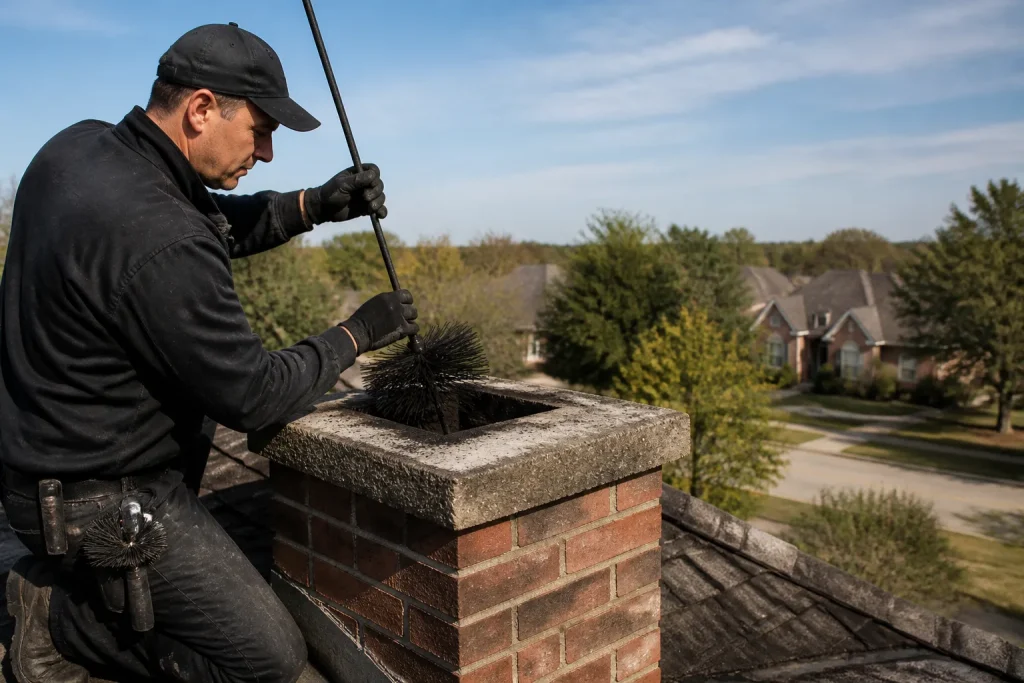
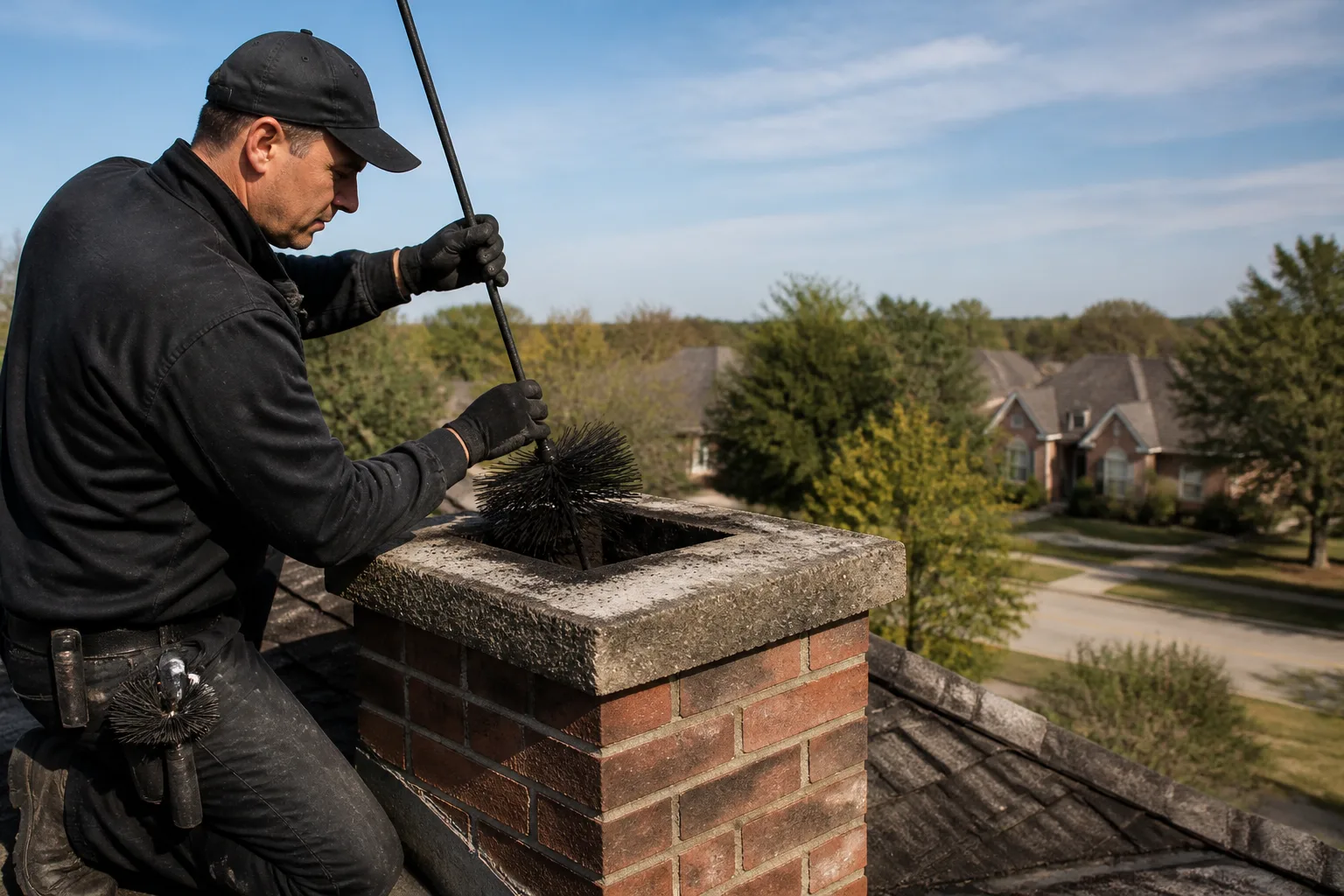
Top Signs You Need Chimney Cleaning Service – Don’t Ignore These
The signs you need a chimney cleaning are glazed black buildup on the flue walls, a smoky smell in the room on humid days, smoke rolling back into the house, white staining on the brick, and tile fragments on the firebox floor. None of those signs tell you how bad the problem is on their own, though. Each one points to something specific happening inside the system, and that’s what this piece is about: what the symptom is reporting, not just that something’s off. If you’d rather have a specialist look than climb up there yourself, call (844) 443-3785 and we’ll take it from there.
What do the signs actually mean? Start with creosote stages
Most chimney articles tell you to look for “black stuff” and leave it there. The useful distinction is which kind of black stuff, because creosote moves through three stages and only one of them brushes away clean.
- Stage 1: Soot and light, flaky deposits. This is what a routine sweep removes. It looks dusty and rubs off easily.
- Stage 2: Denser, crusty deposits that cling to the flue walls. A standard brush can struggle here, and this is often where a homeowner’s memory of “it got swept last year” doesn’t match the reality inside the pipe.
- Stage 3: Glazed, hard, tar-like creosote baked onto the flue. It doesn’t brush out. It’s the stage most associated with chimney fires, and it’s the reason we treat stage as more important than how dirty the chimney looks from the firebox.
The progression from stage 1 to stage 3 comes from incomplete combustion: cool flue temperatures, poorly seasoned wood, and restricted airflow all push unburned gases onto the walls to condense and harden. In Westchase, where our winters rarely demand a fire every night, that cooler operating pattern matters more than people expect.
Why does the fireplace smell smoky in a Westchase home?
A smoky smell on a humid Houston-area day usually means condensation has picked up odours from creosote deposits inside the flue, and it’s often the first sign of stage 2 or stage 3 buildup. The smell isn’t the problem. The smell is the report.
Here’s why this happens. Creosote absorbs moisture. When the air turns muggy, the deposits release that absorbed smell back into the room, and because chimney flues are essentially pressure-driven, the odour travels down into living space. The bigger the deposits, the stronger the report.
A few things make it worse in Westchase specifically:
- Humidity holds odours against masonry longer than dry air does.
- Short, occasional fires never get the flue hot enough to burn off light deposits, so they layer up instead.
- A chimney that cools down hard between fires pulls air (and smells) back into the house.
If a musty, burnt, or ashy smell shows up in a room that has no fire burning, that’s your cue to have the flue inspected rather than sprayed with an air freshener and forgotten. From firebox to chimney cap, we inspect what we sweep, so the smell gets traced to a source instead of guessed at.
What does smoke backdrafting into the room tell you?
Smoke rolling into the room is a pressure or flow problem, and it almost always comes from one of three causes: a blockage, a draft problem, or a liner failure. Those three need completely different responses, which is why “the chimney needs cleaning” is sometimes the wrong diagnosis.
Here’s the short version of each:
- Blockage: debris, animal nests, or a collapsed cap section sitting in the flue. Smoke has nowhere to go, so it comes back down.
- Draft problem: the flue is clear but too short, too cold, or fighting negative pressure from a fan, another appliance, or a tight modern house. Nothing is blocked; the flow itself is weak.
- Liner failure: a cracked, spalled, or improperly sized liner breaks the flue’s ability to channel exhaust. This is the one that can turn a smoky room into a carbon monoxide problem, and it’s why we look at the liner, not just the soot.
Treating a draft problem with a sweep fixes nothing. Treating a liner failure with a sweep fixes nothing and leaves a hazard in place. That distinction is the whole reason we inspect the full chimney before we recommend work. Where a liner needs restoring rather than replacing, HeatShield resurfacing can bring a damaged flue back without a full reline, which is a cost-saving option a general sweep usually can’t offer.
What can you check yourself from the firebox?
You don’t need to climb the roof to spot several real signs. From the firebox, three visual cues tell you a lot about what’s happening higher up the flue.
- Glazed black buildup. Shiny, tar-like coating on the firebox walls or the damper area points toward advanced creosote. Shiny is worse than sooty.
- White efflorescence on the brick. Powdery white staining is moisture moving through the masonry and leaving mineral deposits behind. That often signals a water problem up top, not just age, and it’s worth having a specialist check the crown and flashing.
- Spalling tile fragments on the firebox floor. Bits of tile flaking and dropping inside the firebox suggest heat damage or moisture breakdown. Loose fragments where the fire sits aren’t cosmetic.
If any of those show up, they’re worth a specialist’s eyes rather than a weekend of guessing. Our technicians have up to 9 years of experience diagnosing exactly these conditions, and we’ve learned that the firebox tells you more than the average homeowner expects. A quick look with the right knowledge beats a hopeful guess every time. In Westchase, we see plenty of chimneys that get used lightly but get checked late, and the firebox signs are usually the first hint something’s building up.
What do animal nests and debris actually do to the system?
A bird nest in the flue does more than block the pipe. It changes the pressure dynamics of the entire chimney, and that’s where the real risk sits.
Chimneys work because warm exhaust rises through a consistent, open column. A flue is sized for that column. Put a nest, a stack of twigs, or a fallen cap piece inside, and you’ve created a restriction. The flue can no longer pull the same volume of smoke out at the same rate, so exhaust backs up. Combustion gets starved for oxygen, the fire burns incompletely, and the creosote builds faster than it should. In the worst case, carbon monoxide gets pushed back into the room.
The debris also catches sparks. That’s a fire risk sitting in the flue, waiting. This is why we recommend a proper cap (Gelco and Famco make durable, weather-tested options) to keep birds, squirrels, and rain out in the first place. A clean flue with a failing cap is a chimney that’s just going to be blocked again next season. If you’re seeing debris or animal activity, we can handle chimney cap & crown work as part of a single visit instead of sending you hunting for a second contractor.
Why do Westchase chimneys build creosote on light use?
Homeowners who light five to ten fires a season often assume they’re building up deposits slowly. In our experience, they can build creosote faster per fire than a heavy user in a colder climate, because the problem isn’t how often you burn. It’s how completely you burn.
Here’s the mechanism. A cool flue doesn’t combust gases fully. Cold surfaces condense those gases into creosote. In a mild Westchase winter, a fireplace that lights for a few festive evenings never really heats its flue to a point where deposits burn off. So each fire leaves a fresh layer that never gets cleared. A homeowner burning 40 fires a season in a cold region gets the flue hot and moving; a Westchase homeowner with a handful of short burns often doesn’t.
The practical takeaway: “I only burn a few times a year” is not a reason to skip an inspection. It’s a reason to have the flue checked by a specialist who understands how this climate affects combustion. That’s the Westchase-specific piece most generic checklists skip entirely.
When to call a pro
Some of what we’ve covered you can check yourself: the firebox walls, the brick, the floor. But the signs that matter most – glazed stage 3 creosote, a failing liner, a restricted flue, carbon monoxide risk – live where you can’t see them from the hearth, and they’re not things to diagnose from a ladder.
Call a specialist when you smell smoke without a fire, see shiny black glazing, notice white staining on brick, or find tile debris in the firebox. Call sooner if smoke is backing up into the room on a cold start, or if you haven’t had the chimney inspected in a while. To understand what a proper visit covers, start with a professional chimney sweep and let the inspection guide the next step. If a damaged liner shows up, HeatShield and DuraFlex systems let a specialist restore or reline in ways a general handyman can’t.
Related services in Westchase: fireplace issues like damaged dampers or firebox problems are covered under fireplace repair, and everything above the firebox – crown, flashing, cap – falls under chimney cap & crown. One specialist covers the whole system, so you’re not juggling contractors.
The Bottom Line
Every sign in this piece is a message from a specific part of the chimney. Glazed black means creosote that won’t brush out. Smoke in the room means a pressure, blockage, or liner problem that needs a real diagnosis. White brick means moisture. Tile debris means heat damage. And light, occasional fires in a mild Westchase climate can build deposits faster per fire than heavy use elsewhere, because incomplete combustion leaves more behind. Knowing what each sign says is what turns a vague worry into a specific, sensible next step – and sometimes the honest answer is that work can wait, which we’d rather tell you than sell you.
Knowing the signs is the easy half. Diagnosing them properly, from firebox to chimney cap, is what a specialist is for, and that’s the only kind of chimney work we do. If you’re in Westchase and need help, Chimney Sweep Westchase offers free estimates – call (844) 443-3785. We answer 24/7. Fast dispatch from 7am to 7pm, Sunday through Friday.
Frequently Asked Questions
In general, a chimney should be swept once there’s noticeable creosote buildup – often expressed as roughly a quarter-inch or more on the flue walls – or once a year if you burn regularly. Light users in a mild climate like Westchase sometimes go longer between sweeps, but that’s a reason for an inspection, not a reason to skip it. In our experience, occasional users here can build glazed deposits just as fast as heavier users because their fires burn cooler and less completely. Call (844) 443-3785 for an honest evaluation of your specific flue.
No, a smoky smell when no fire is burning usually points to creosote deposits absorbing moisture from humid air and releasing odour back into the room. It’s common on muggy Houston-area days, but “common” and “harmless” aren’t the same thing. That smell often accompanies stage 2 or stage 3 buildup. A proper sweep and inspection can confirm whether the flue is clean and safe. Call (844) 443-3785 and we’ll take a look.
It’s not something we recommend for the parts that matter most. The roof, the flue interior, and the liner are where real creosote and structural problems live, and a DIY brush can’t reliably remove glazed stage 3 deposits or spot a cracked liner. The risks of missing a failure aren’t worth saving a professional visit. For what you can safely do – checking the firebox for glazing, white staining, and tile debris – you now have the checklist. For everything above that, leave it to a specialist. Call (844) 443-3785.
Skipping a chimney cleaning lets creosote and blockages accumulate undetected. The realistic outcomes are a chimney fire fuelled by glazed creosote, carbon monoxide pushing back into the room because the flue is restricted or the liner has failed, and progressive damage to the flue that turns a simple cleaning into a structural repair. None of those are things you’ll see from the hearth. A free inspection is the cheapest way to know whether there’s a real problem or whether you can relax. Call (844) 443-3785.
Written by the team at Chimney Sweep Westchase.
Need Chimney Cleaning Help?
Call Chimney Sweep Westchase - the local pro we connect you with is licensed and insured, with free written estimates in Westchase.
(844) 443-3785