
Last updated November 24, 2026
 Sweep & inspection
 Caps & crowns
 Flue relining
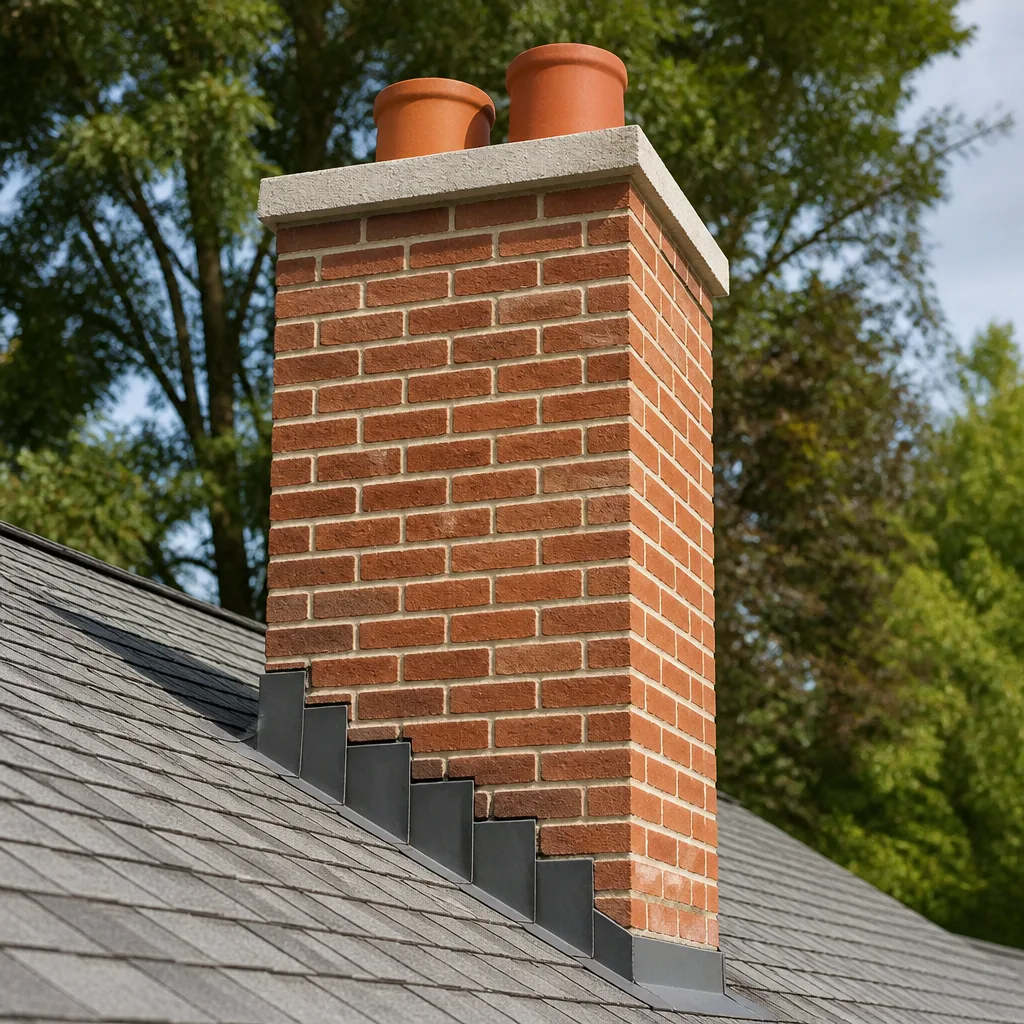 Masonry repair
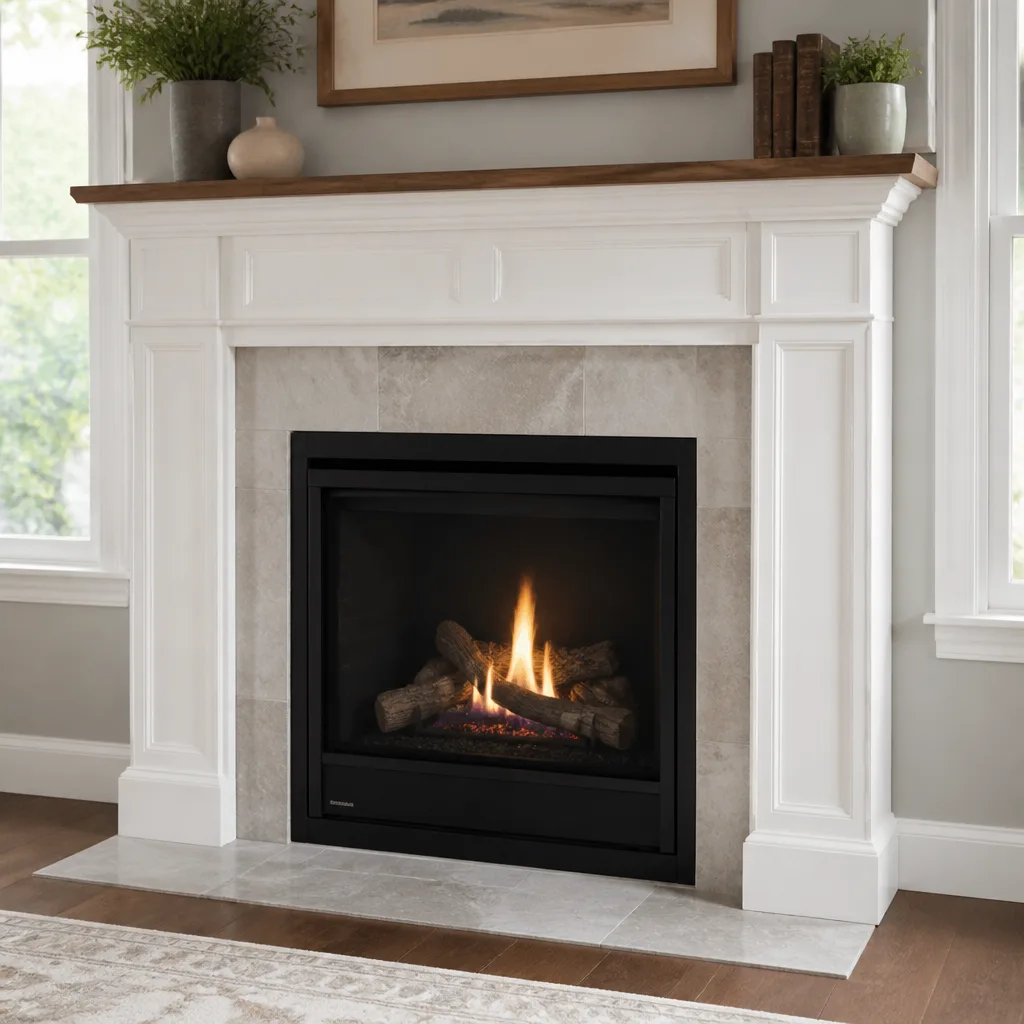 Gas fireplace service
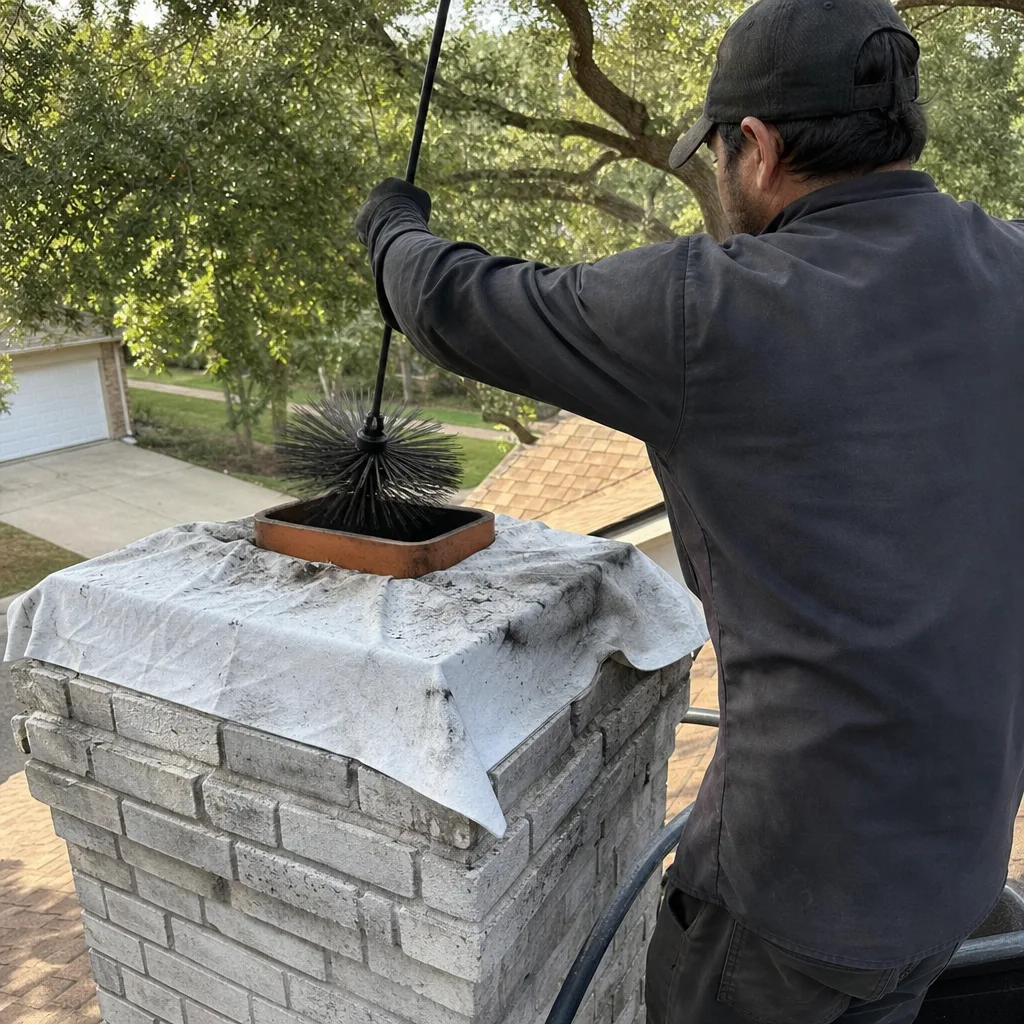
Level 1 sweep and inspection to the NFPA 211 annual standard - flue, crown, cap, and flashing checked and photographed
Chimney sweep logs do not sweep chimneys. They loosen some creosote - which then falls where a brush and vacuum still have to collect it.
Chimney Cleaning Permits, Codes & Inspections in Westchase, TX: What You Need to Know
Here’s the part that surprises most homeowners: the cleaning itself is the simple half. Anyone can swipe a brush up a flue. The paperwork around the flue is where people get hurt. We’ve watched families in Westchase get a liner swapped out by a generalist, feel relieved the creosote is gone, and then discover months later that the work left no paper trail their insurer or a future buyer would accept. This guide walks through where the permit line actually sits in our corner of Harris County: what’s exempt, what needs paperwork, which code authority has jurisdiction, and what NFPA 211 asks of the system from firebox to chimney cap. You’ll finish knowing which questions to ask before anyone touches your chimney in Westchase.
Quick Answer
Routine chimney cleaning and inspection in Westchase almost never require a building permit, because a sweep is maintenance, not construction. Any work that alters the structure of the chimney, its liner, or the firebox, however, typically does, and in Harris County that usually means a permit from whichever authority governs your specific subdivision or property. So the honest short version: sweeping is exempt, repair and replacement are not, and you should confirm the permitting path before work begins rather than after.
Styles & brands we work with
- Sweep & inspection
- Caps & crowns
- Flue relining
- Masonry repair
- Gas fireplace service
Table of Contents
- Where the Permit Line Sits: Cleaning vs. Repair vs. Replacement
- Which Code Authority Governs Your Westchase Chimney
- NFPA 211: The Standard Behind the Rules
- What a Code-Compliant Inspection Report Should Contain
- When a Permit Protects You, Not Just the Contractor
- Resale, Insurance Claims, and Warranty Documentation
- Step-by-Step: How to Verify Code Compliance Before You Hire
- What Makes Westchase Chimneys Different
Where the Permit Line Sits: Cleaning vs. Repair vs. Replacement
Not every trip up your roof needs a permit. Texas treats chimney maintenance and chimney construction as two different categories of work, and where a job falls matters more than most homeowners realize. The dividing line is whether the work changes the structure. A brush and a camera don’t. A new liner does.
Think of it this way: a sweep cleans what’s already there. A repair or replacement creates something new, and new construction is what building codes exist to regulate.
Below is the general breakdown of what falls on each side of that line. Local enforcement varies, so treat this as a starting map, not the final word.
- Permit-exempt (typically): Routine sweeping and creosote removal. Visual inspections. Installing a chimney cap as an accessory. Damper adjustment or cleaning. Removing debris from the firebox.
- Permit-required in most jurisdictions: Relining or replacing a flue liner. Rebuilding a chimney above the roofline. Replacing or structurally repairing a crown. Firebox rebuilds involving masonry or refractory work. Removing a chimney entirely. Converting a wood-burning fireplace to gas where venting changes.
- The gray zone (check locally): Relining with a flexible system through an existing flue. Patching a crown versus replacing it. Cosmetic firebox resurfacing versus structural repair.
The gray zone is where Westchase homeowners get caught. We’ve seen a chimney repaired with no documentation because the installer called it “just patching the crown.” A patched crown and a new crown are different jobs, and only one usually needs a permit. When in doubt, ask your building department directly and get the answer in writing before anyone climbs the ladder.
This is one reason we insist on inspecting what we sweep rather than sweeping blind. A sweep that doubles as an assessment tells you immediately whether the job ahead is maintenance or construction, and construction is where you need the permit conversation to happen.
Which Code Authority Governs Your Westchase Chimney
Here’s where Westchase gets genuinely interesting. Westchase sits at the edge of Houston proper and straddles a patchwork of jurisdictions. Some properties fall under City of Houston permitting, others under Harris County, and entire subdivisions within the area are governed by their own municipal utility districts with their own interpretations. The permit you need depends on which entity has authority over your specific address.
Westchase has grown up in waves since the 1960s, and the subdivisions were platted under different rules. Older sections near Westheimer may sit in one jurisdiction while newer development to the south sits in another. A permit pulled by a neighbor two streets over might not apply to you at all.
Here’s what determines your code authority:
- Is your property inside Houston city limits? If so, Houston’s permitting office governs chimney construction activities on your property.
- Is it in unincorporated Harris County? Harris County Engineering handles permits for unincorporated areas, and requirements differ from the city’s.
- Is it in a municipal utility district with its own rules? Some MUDs adopt their own building standards, and a permit that satisfies the county may not satisfy the district.
- Is it a townhome or HOA-governed property? Many Westchase townhomes and subdivisions add architectural or exterior-change review on top of the government permit.
We’ve had homeowners tell us they “already checked” and later learn they checked with the wrong office. The simplest path: call the City of Houston Permitting Center and ask them to confirm whether your address sits in their jurisdiction. If it doesn’t, they’ll point you toward Harris County. That single call resolves most of the confusion.
Once you know your authority, hold on to the name. Any contractor quoting you on chimney repair in Westchase should be able to tell you which office issues the permit for your address.
NFPA 211: The Standard Behind the Rules
If you’ve read anything about chimneys, you’ve seen NFPA 211 referenced. It’s the Standard for Chimneys, Fireplaces, Vents, and Solid-Fuel Burning Appliances, and it’s the technical backbone that most local codes draw from. It doesn’t replace your local building code, but it informs it, and knowing what it asks for gives you a way to judge whether work was done correctly.
The three areas that matter most for Westchase homeowners:
- Liner clearances. NFPA 211 specifies how far a flue liner must sit from combustible materials and how much clearance the chimney structure needs from wood framing. A properly installed liner maintains those clearances through the entire run, including at transitions and the top of the flue.
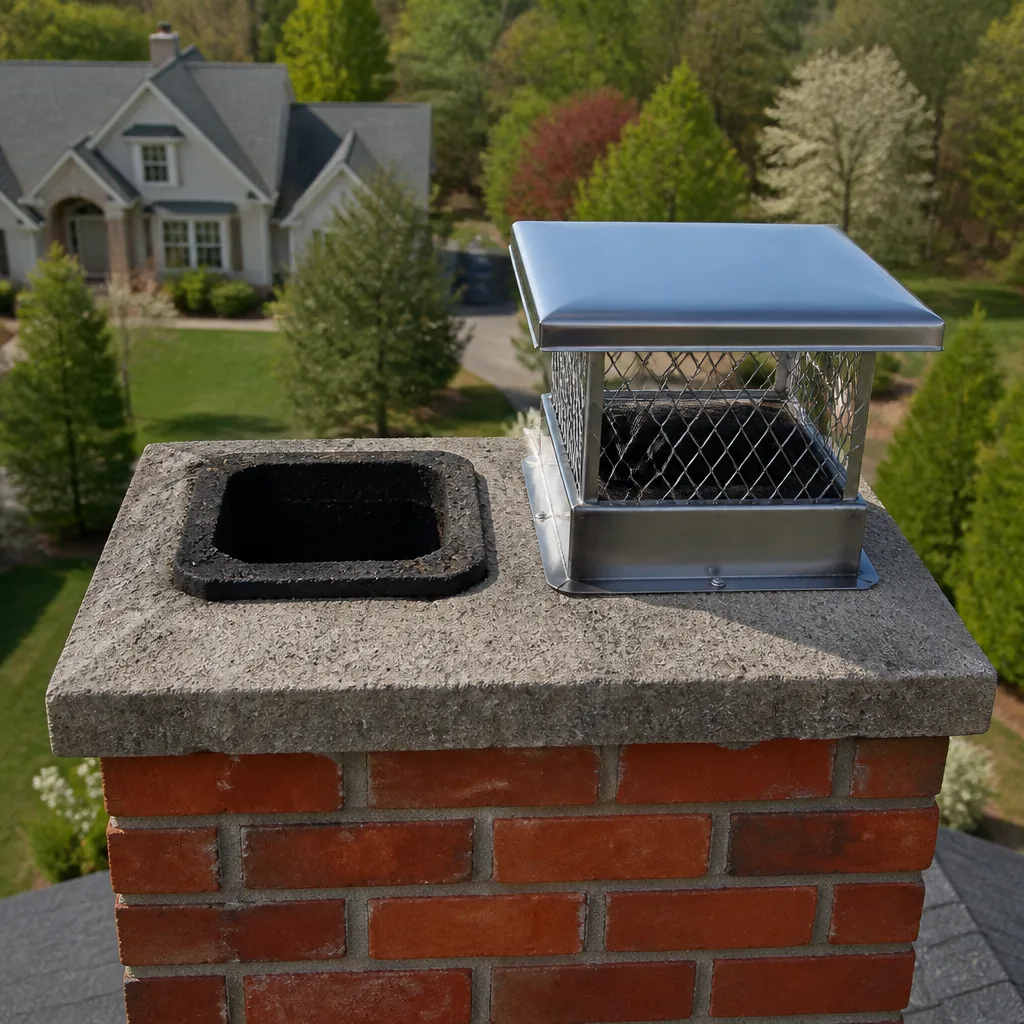
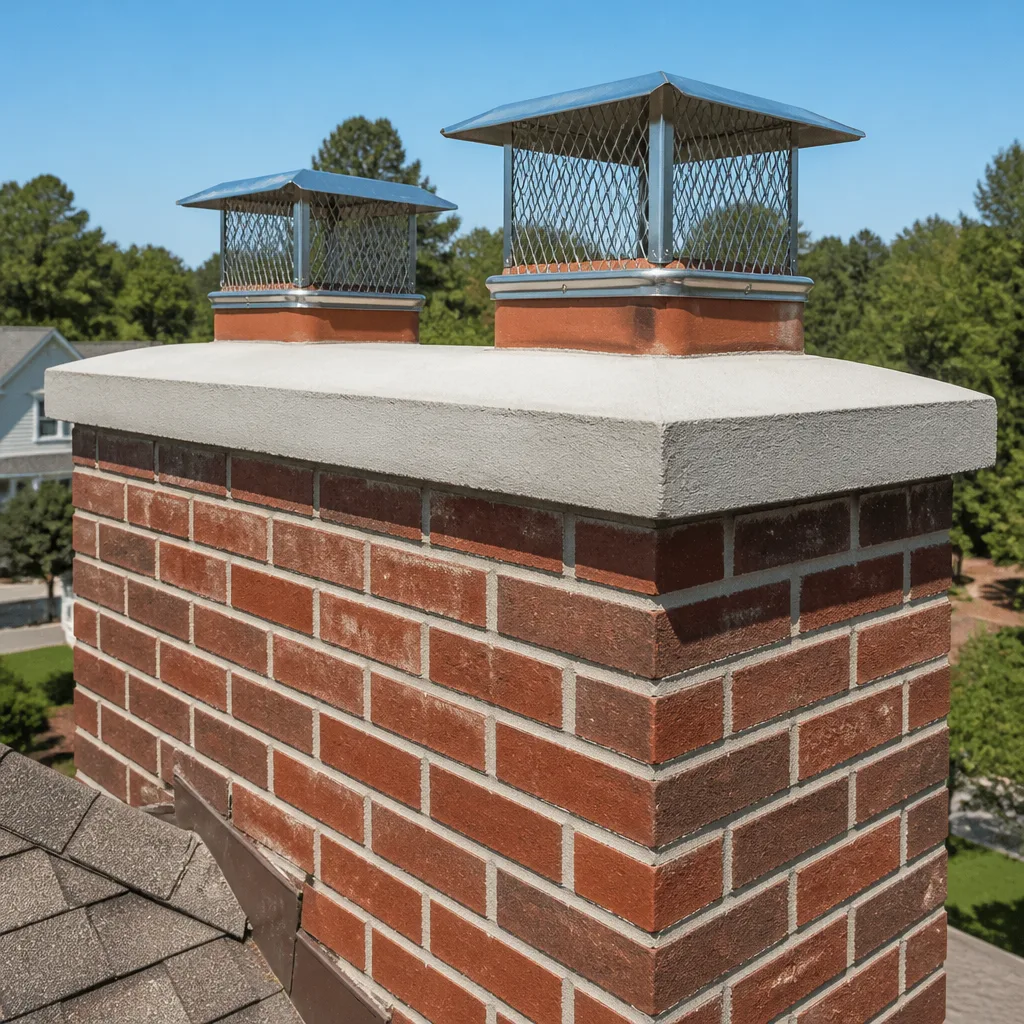
- Cap sizing. A chimney cap must allow flue gases to vent freely while blocking rain, animals, and debris. An undersized or incorrectly screened cap restricts the draft. Famco and Copperfield caps are built to standard sizes, which is why we lean on them for jobs where clearance and fit matter.
- Crown construction. The crown is the concrete or masonry cap at the very top of the chimney. NFPA 211 requires the crown to shed water away from the flue and resist cracking. A cracked or poorly sloped crown lets water straight into the flue, which is one of the most common sources of long-term chimney damage in our part of Texas.
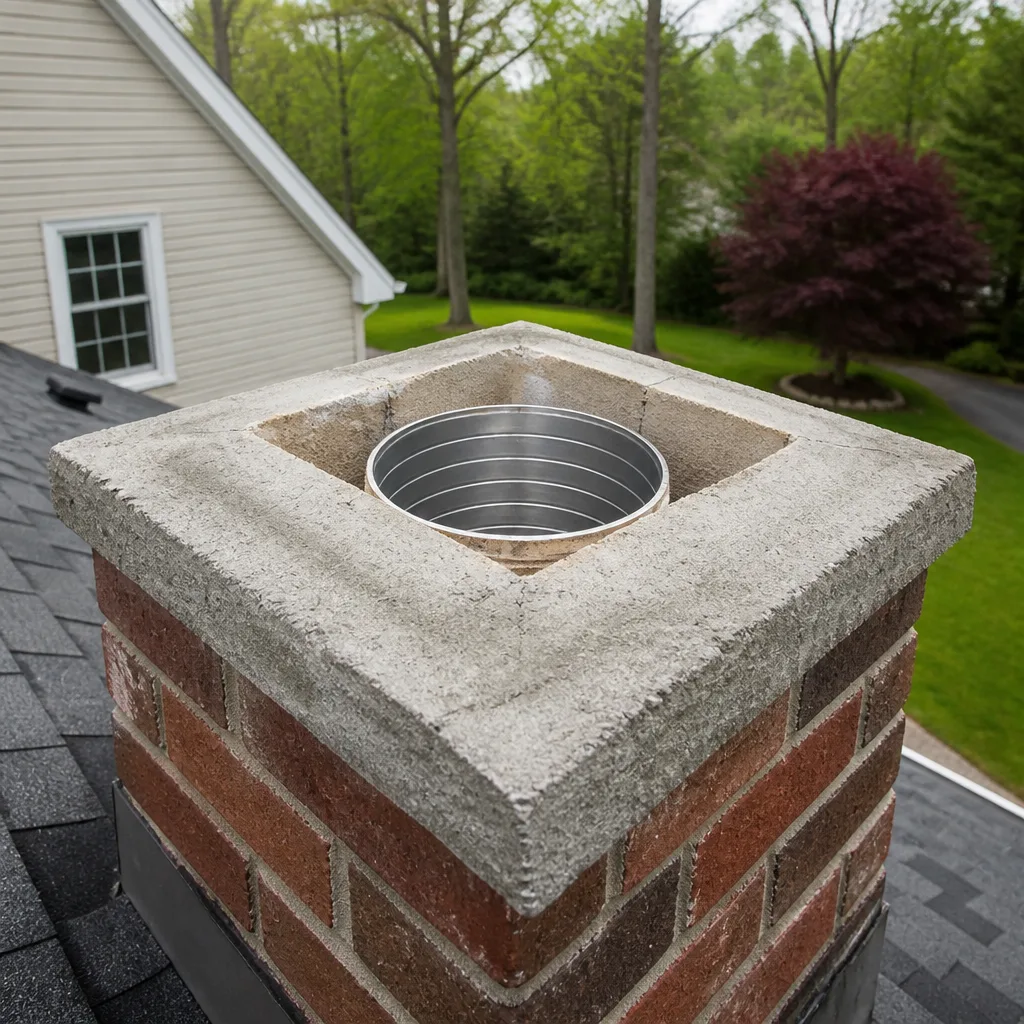
When we reline a chimney with DuraFlex, it’s because flexible liner systems let us maintain the clearances NFPA 211 requires even when the original flue is offset or irregular. Rigid liners are fine in a perfectly straight flue, but they don’t negotiate corners. And when a liner needs restoration rather than full replacement, HeatShield application lets us bring the existing flue back to standard without tearing it out.
The takeaway: NFPA 211 isn’t abstract code. It’s the measure of whether your chimney will behave safely when you light a fire. If a contractor can’t explain how their work meets it, that’s a signal worth listening to.
What a Code-Compliant Inspection Report Should Contain
An inspection without a report is just a walk-around. NFPA 211 defines three inspection levels, and the report you receive should clearly state which level was performed and what was found. If your last chimney visit didn’t produce a written report, you probably received less than you think you paid for.
Here’s what a real report should contain, and what our inspection reports are built to include:
- The inspection level. Level 1 is a visual check of accessible portions. Level 2 adds a camera scan of the flue and is standard when you’re selling a home, changing appliances, or after a chimney fire. Level 3 involves opening the structure and is rare.
- Condition notes for every component. Firebox, damper, smoke chamber, flue, liner, crown, cap. Each gets an assessment, not just the ones with obvious problems.
- Photos and camera footage. Visual evidence of any defects. A homeowner should be able to see exactly what the inspector saw.
- Clearance measurements. Especially where the flue passes through a ceiling, roof, or attic penetration.
- Findings categorized by urgency. What needs attention now, what can wait, and what’s fine as-is.
- Repair recommendations with plain explanations. “Liner degradation at the smoke chamber transition” beats “liner needs work.”
We send every homeowner a photo report before we recommend a single repair, because we’ve seen too many folks pay for liner jobs they didn’t need and too many who ignored a problem they did. The report is the tool that makes the recommendation verifiable rather than a sales pitch.
A good report also protects you later. Keep it filed with your home records – it becomes evidence if you sell, refinance, or file an insurance claim.
When a Permit Protects You, Not Just the Contractor
Most homeowners assume permits exist to make contractors accountable. They do, but the bigger benefit lands on the homeowner. An unpermitted chimney repair can create problems that surface years later, and by then, you’re the one holding them.
Here’s the honest picture. An unpermitted liner replacement or structural repair can:
- Leave your homeowner’s insurance with a basis to question coverage for a fire loss tied to the chimney. Most policies cover fire damage, but an unpermitted alteration to a code-regulated system can trigger a coverage dispute during a claim.
- Surface during a pre-sale inspection, which can stall or reprice a real estate transaction. Buyers’ inspectors look for permits on recent chimney work as a matter of course.
- Void manufacturer warranties on liner systems and other components, because most warranties assume installation to code.
- Create a disclosure obligation if you ever sell the home. Some buyer agreements ask directly about unpermitted work.
A permit doesn’t make the work any better. But it does two things: it puts a government inspector’s eyes on the finished job, and it puts a paper record in the public file that says the work was done and passed. For a liner replacement or a rebuilt crown, that paper is often the difference between a covered claim and a fight.
If you’ve inherited a home with a recent unpermitted chimney repair, don’t panic. Talk with your building department about a retroactive inspection. It’s not always possible, but where it is, it’s worth doing. Our chimney cap & crown and liner documentation work is built with that kind of file in mind.
Resale, Insurance Claims, and Warranty Documentation
Chimney paperwork usually matters at three points in a home’s life: when it sells, when a claim happens, and when a component fails under warranty. In each case, what you can show determines what you get.
At resale, most modern buyer agreements and inspection reports call out unpermitted work on code-regulated systems. A chimney that’s had a liner installed with no record raises a question mark. Buyers commonly counter with a request for a Level 2 inspection and a chimneysafe document – and if that inspection finds unpermitted work, the deal renegotiates. We’ve seen Westchase sellers ask us for a clean inspection report because they had to provide one, and we couldn’t provide it because the previous contractor left nothing in the record.
For insurance claims, the important document is the inspection report and the permit file. If a chimney fire damages your home and the insurer asks whether the chimney was code-compliant when the fire started, permit records and inspection notes are what speak for you. Without them, you’re arguing from memory.
For warranties, the key is product-plus-installation documentation. A DuraFlex liner, a HeatShield restoration, or a Famco or Copperfield cap all carry installation expectations, and most manufacturer warranties are written to be voided when those expectations aren’t met. Keep every receipt and every installation record. When something fails a few years down the road, you’ll be glad you have them.
The simplest system: one folder, physical or digital, that holds every inspection report, permit record, receipt, and warranty card for your chimney. It takes ten minutes to set up and it pays for itself the first time you need it.
Step-by-Step: How to Verify Code Compliance Before You Hire
Before you sign with any chimney contractor in Westchase, run this sequence. It takes less effort than most homeowners expect and it catches the problems before they start.
- Ask which jurisdiction they’ll pull the permit from. A qualified contractor knows your address’s permitting authority without having to look it up. If they say “we don’t bother with permits,” that’s your answer.
- Ask for their written scope. It should specify the work, the materials, and any code standard the work is being performed to. Vague scopes are a warning sign in chimney work just like anywhere else.
- Ask how they’ll document it. Photos before and after? A permit inspection? A signed completion document? You want all three for anything beyond a sweep.
- Confirm the credentials of the crew. The local professional we connect you with is licensed and insured as their state requires. Ask for proof and keep a copy.
- Check the permit record at your authority’s office. Once work is complete, verify the permit was actually filed and closed. A contractor who told you they pulled a permit but never did is not a contractor you want to trust again.
- File everything. Report, permit closure, receipts, warranties, in one place.
We run this sequence ourselves on every repair job, because the check protects the homeowner and the record protects the work. Our fireplace repair recommendations come with the same documentation standard as our liner work – if the recommendation is worth making, it’s worth documenting.
What Makes Westchase Chimneys Different
Our local climate shapes chimney problems in ways that matter for code compliance. Westchase’s humid, warm, subtropical summers and occasional mild winters mean the biggest structural threat to a chimney here isn’t frost – it’s moisture intrusion from the top. A cracked crown, a missing or undersized cap, or failed flashing around the roofline lets water into the flue during our frequent heavy rain events. Over time, that water degrades mortar, rusts dampers, and can undermine the liner itself.
That means the crown and cap work matters more here than in drier parts of the state. NFPA 211’s crown and cap standards exist for exactly this reason, and we treat a bad crown as a code issue, not just a cosmetic one. The same goes for chimney caps, which are often installed undersized for the flue diameter. A properly sized Famco or Copperfield cap fits the flue, sheds water away from the crown, and keeps animals out.
Westchase also has a lot of homes with original masonry chimneys from decades ago, and older fireboxes and flues that have been through multiple generations of use. We’ve found that when we open up a chimney in this part of Harris County, we’re almost as likely to find a liner problem as we are simple creosote buildup. That’s why an inspection as part of every sweep is not just a best practice here – it’s a practical necessity. It’s also why our chimney sweep service includes a camera pass by default.
Common Mistakes to Avoid
- Skipping the permit for a “small” repair. Crown replacement and liner patching both look small from the ground. Both are permit-worthy in most Harris County jurisdictions, and skipping the paperwork is where insurance problems begin.
- Assuming the sweep is also a real inspection. A cleaning without a report and camera pass is maintenance and nothing more. If your last chimney visit didn’t produce written findings, you haven’t actually had an inspection.
- Booking the cheapest liner quote without checking materials. A low bid is often a low-grade liner installed without documentation. DuraFlex and HeatShield exist because the cheaper alternatives fail early. Ask what product is being used and what standards it meets.
- Ignoring the crown because the fire still burns. A cracked crown doesn’t stop a fire from working – it lets water in and slowly degrades the flue. It’s one of the most common causes of liner failure we see in Westchase.
- Not verifying which authority actually governs your address. Assuming you’re in Houston when you’re in unincorporated Harris County (or vice versa) leads to the right permit being pulled with the wrong office. One phone call settles it.
- Discarding the inspection report. If you don’t keep the report, you don’t have the evidence you’ll want at resale or in a claim. File it immediately.
- Hiring a generalist for liner-level work. Chimney systems are their own trade. A handyman who “does everything” usually doesn’t have the liner experience to negotiate an offset flue or document the work correctly.
See the difference
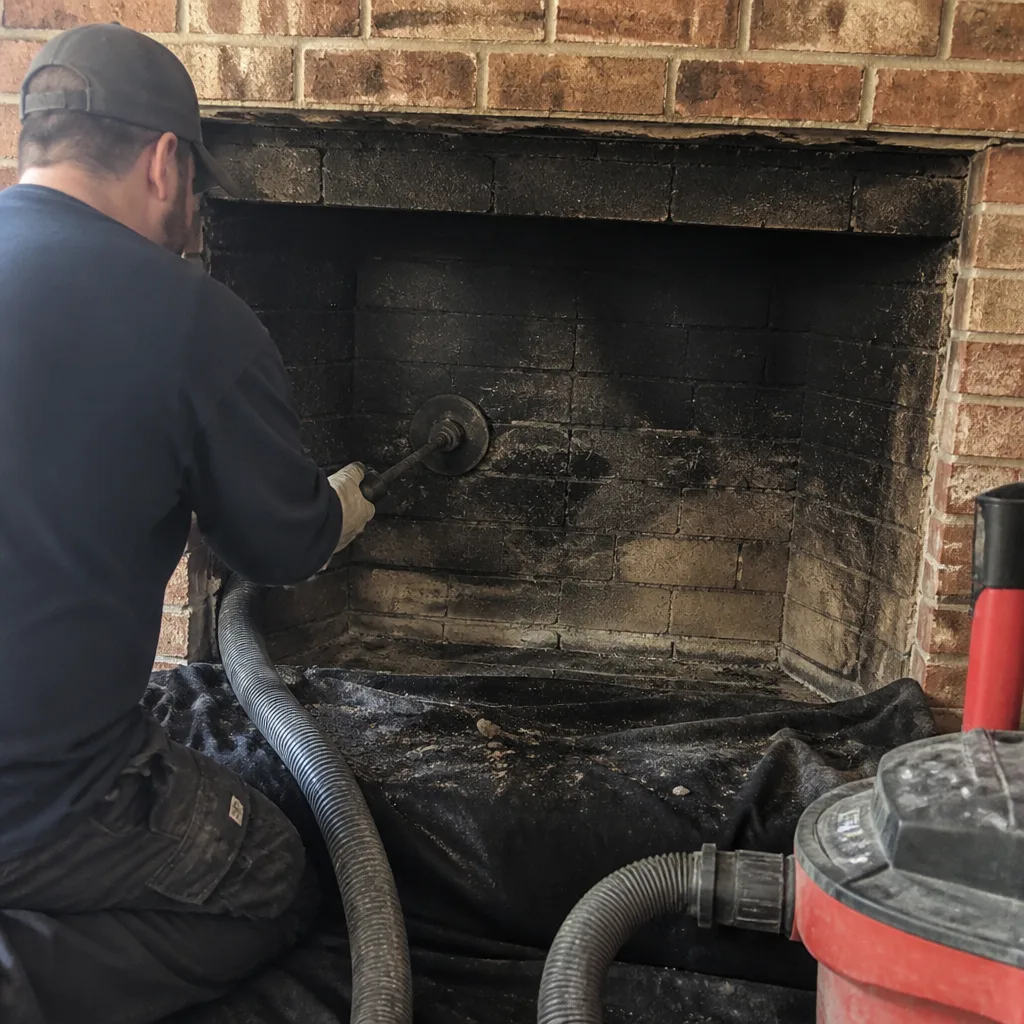 Before
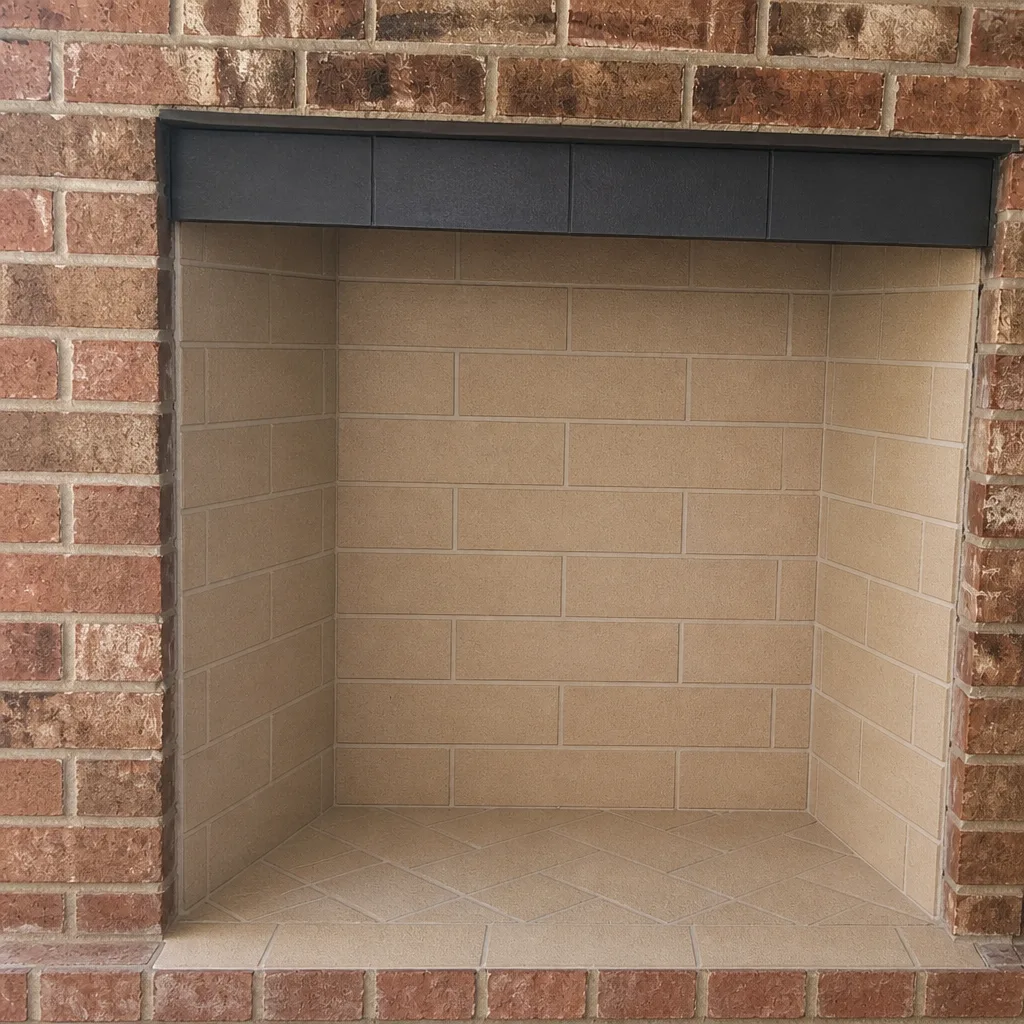 After
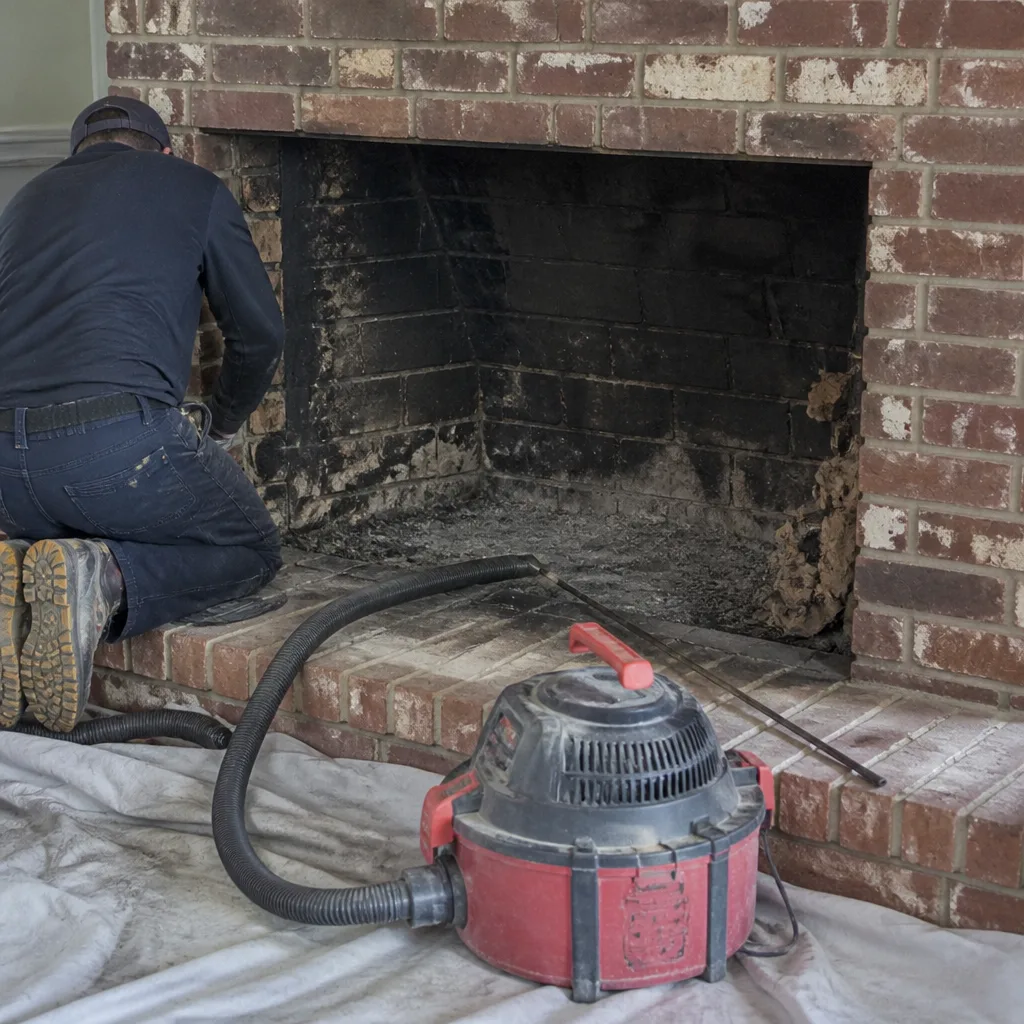 Before
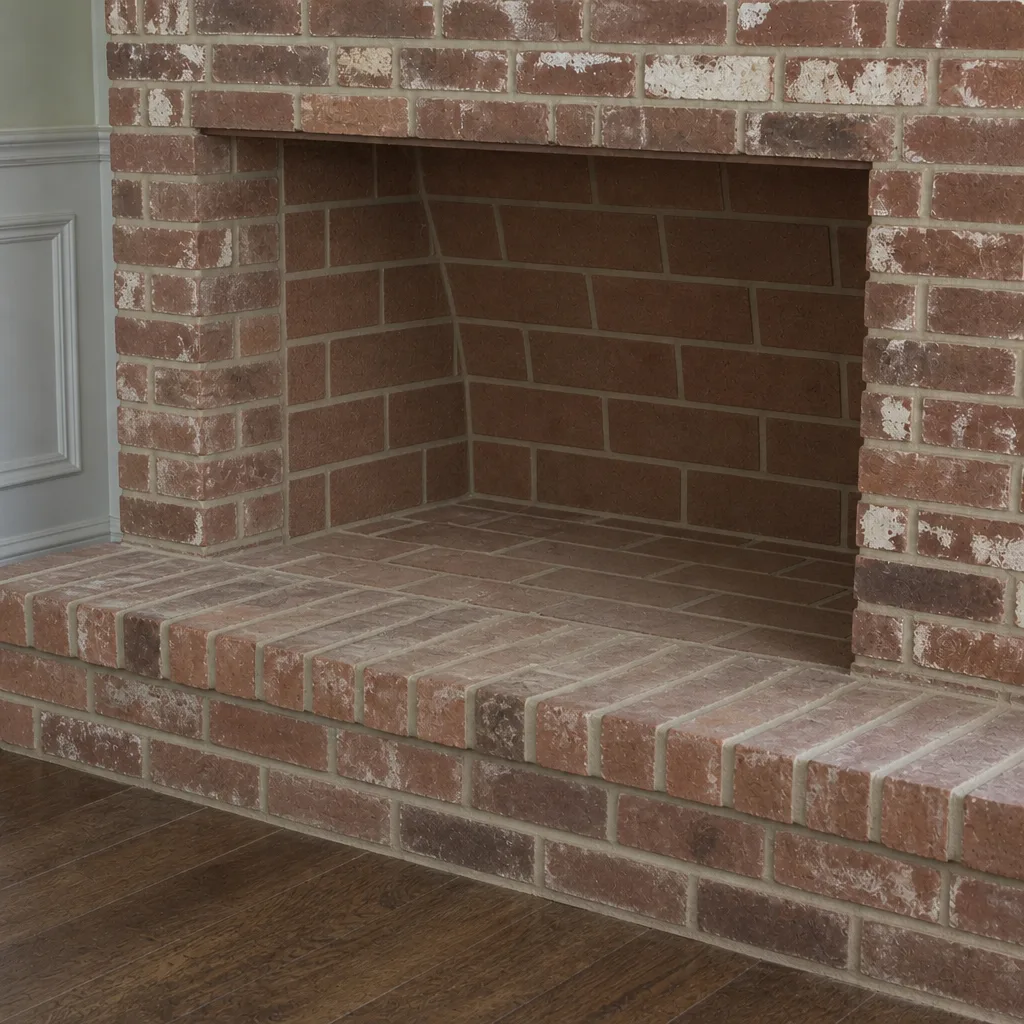 After
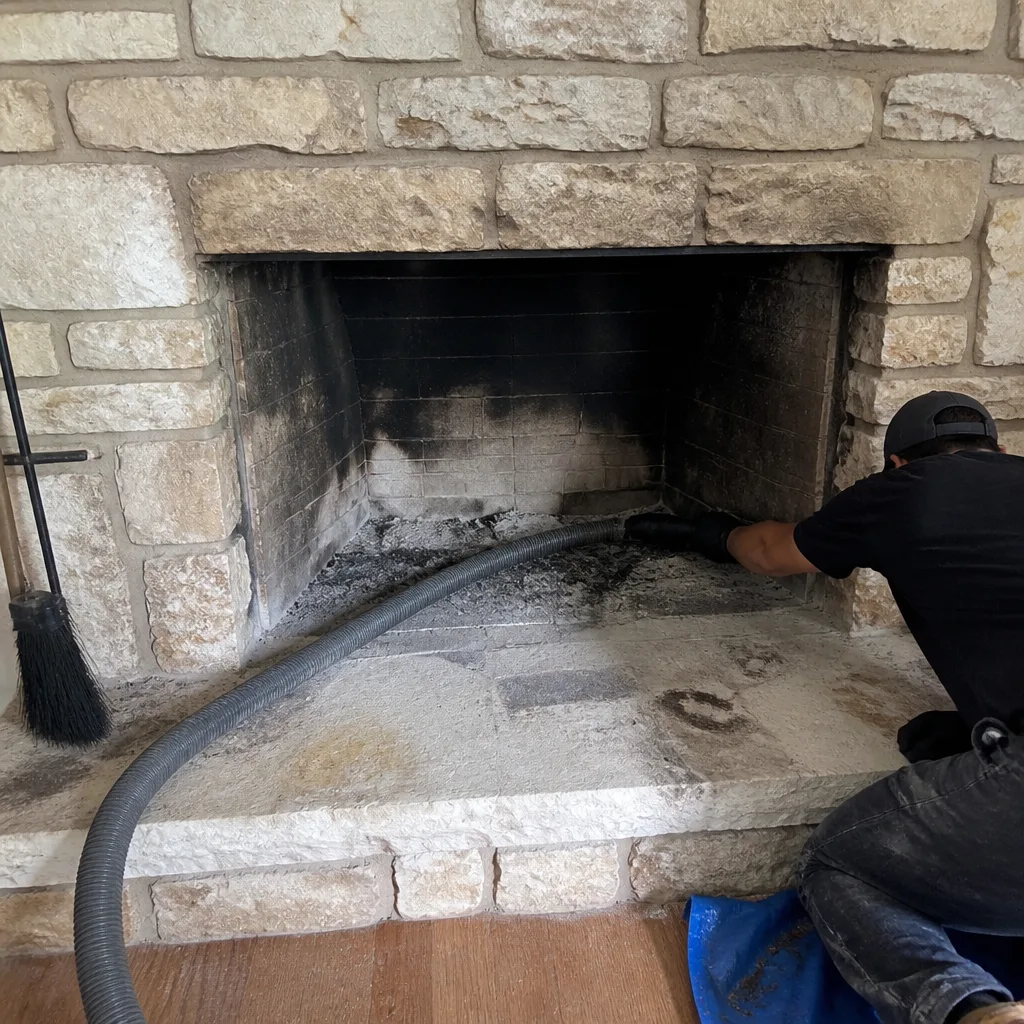 Before
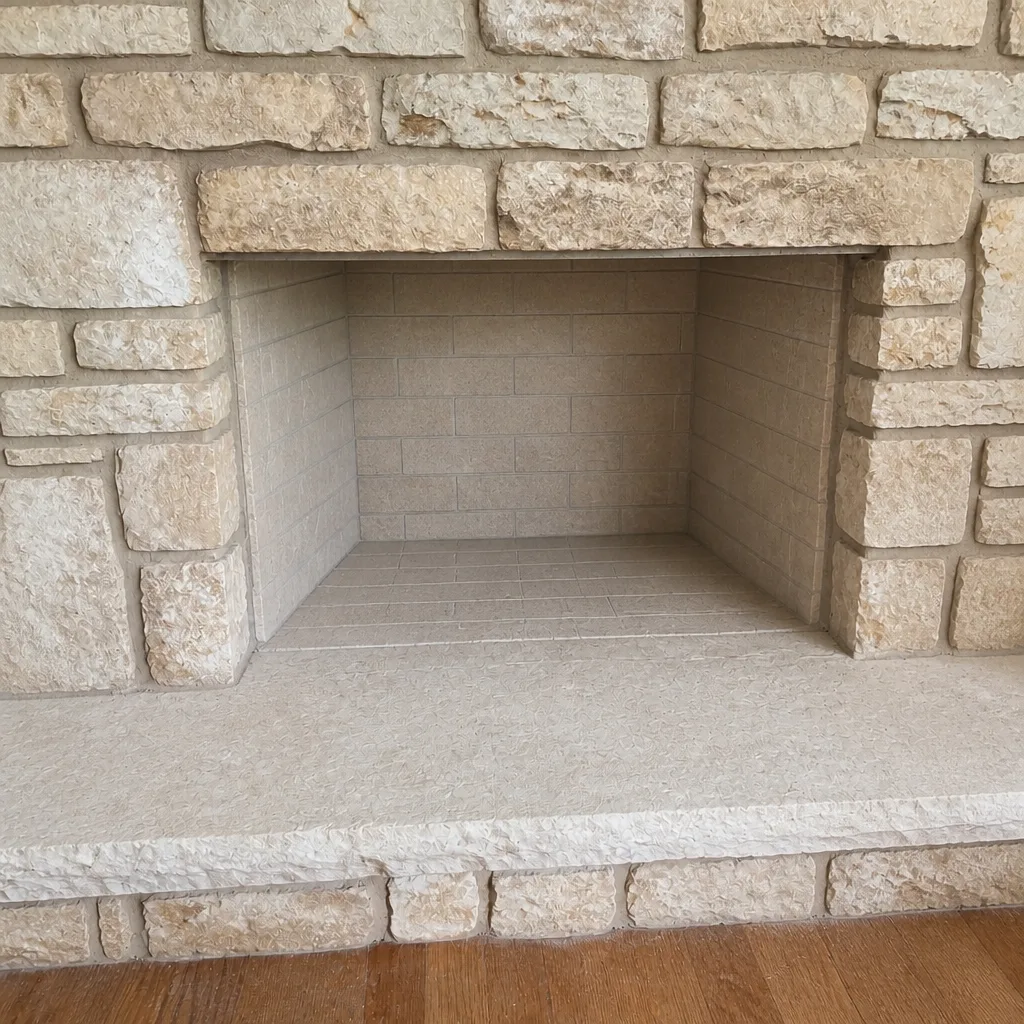 After
When to Call a Professional
Some chimney work isn’t a DIY category. Anything involving disassembly, liner replacement, crown work, or gas appliance venting belongs in trained hands, and this is where a specialist earns their keep. Call a professional when your damper won’t move freely or the firebox has visible spalling mortar. Call when the fire smokes back into the room, which can indicate a draft or flue issue that a camera will pinpoint. Call when a cap has come loose or a crown is visibly cracked, because water is finding a way in. Call before lighting the first fire of the season if your chimney hasn’t been inspected within the last year. And call before any repair job that touches the liner, crown, or firebox structure, because that’s the domain where the permit question and the code standard both come into play. Chimney Sweep Westchase offers free estimates in Westchase – call (844) 443-3785.
From firebox to chimney cap, one call covers the entire chimney. Our technicians have up to 9 years of experience, and we work in DuraFlex, HeatShield, Famco, and Copperfield materials because they hold up in this climate.
Frequently Asked Questions
No. Routine sweeping and inspection don’t require a permit because they don’t alter the structure. Permits come into play for repair, relining, crown replacement, and any work that changes the chimney system. Call (844) 443-3785 for an exact quote – estimates are free.
A typical chimney sweep in Westchase runs in the same range as most of the Houston metro area, priced per job by a written estimate rather than a flat rate. Cost varies with flue condition, access, and whether the job includes a camera inspection. Call (844) 443-3785 for an exact quote – estimates are free.
It depends on the specific address. Some Westchase properties sit inside City of Houston permitting, others in unincorporated Harris County, and some within MUDs with their own rules. One phone call to Houston’s permitting office confirms which authority governs your address. Call (844) 443-3785 for help sorting out the question – estimates are free.
NFPA 211 requires a chimney cap that allows flue gases to vent freely while blocking rain, animals, and debris, and a crown that sheds water away from the flue and resists cracking. Undersized caps and cracked crowns are the two most common code shortfalls we find in Westchase. Call (844) 443-3785 for an inspection – estimates are free.
Most chimneys should be swept annually when in regular use, and inspected at least once a year even when they aren’t. If you burn regularly through the heating season, an annual sweep is the practical baseline. The definitive call comes from the inspection, not the calendar. Call (844) 443-3785 to book a sweep – estimates are free.
Not safely. A liner replacement alters the flue structure and is a code-regulated component. Skipping the permit leaves you exposed if you file an insurance claim, sell the home, or need to invoke a manufacturer warranty on the liner. Call (844) 443-3785 to walk through the permitting path for your address – estimates are free.
The Bottom Line
Chimney cleaning doesn’t need a permit. Chimney repair usually does. That single distinction governs how you should think about every piece of chimney work done on your home in Westchase, whether it’s a sweep, a reline, or a cap and crown replacement. NFPA 211 sets the technical standard, your jurisdiction sets the permit path, and your inspection report is the evidence that ties the two together. When in doubt, confirm the permit question before work begins, and keep every document – report, permit, receipt, warranty. It costs nothing to keep the paper and it costs a lot to have to recreate it later.
If a contractor can’t answer the permit question, that’s not about paperwork. It’s about whether the work will hold up at the moments you need it to. Chimney Sweep Westchase is a chimney-only specialist, and we treat the file with the same care we treat the flue. Whether you’re dealing with an older masonry chimney, a recent unpermitted repair, or just want a straight answer on whether a job is maintenance or construction, we can help you sort it. Our full-system coverage runs from the Chimney Sweep Westchase evaluation through every repair recommendation, so you’re not juggling contractors or chasing missing paperwork years from now.
Call (844) 443-3785 for a free estimate. We answer 24/7. Fast dispatch from 7am to 7pm, Sunday through Friday.
Written by the team at Chimney Sweep Westchase.